Film photography forces you to slow down. Every frame costs something. Every shot matters. But if you’re not keeping track of what you’re doing, you’re leaving improvement up to memory—and memory isn’t reliable.
Why You Should Keep a Film Photography Log
Shooting film without a log is like trying to improve without feedback. When you get your scans back, you might remember a few shots—but not:
- What aperture you used
- What shutter speed you chose
- What lighting conditions you were working in
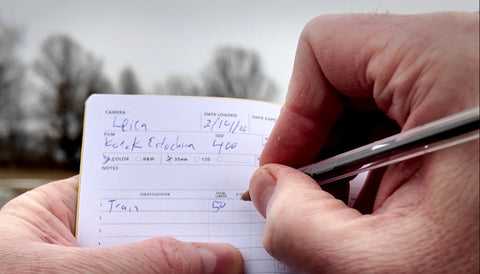
If you want a logbook that already has all of this laid out for you, the WRKBKS Film Photography Log is designed around exactly this list.
A film photography log solves that. By writing things down as you shoot, you create a record you can actually learn from. Over time, patterns start to emerge:
- Which film stocks you prefer
- How you tend to expose
- What works—and what consistently doesn’t
That’s how you get better.
What to Write in a Film Photography Log
A good film photography notebook doesn’t need to be complicated—it just needs to be consistent. Here’s what you should track for each roll:
Basic Info:
- Camera
- Lens
- Film stock
- ISO
Per Shot (or key shots):
- Aperture
- Shutter speed
- Lighting conditions
- Location or subject
- Notes (anything unusual or intentional)
You don’t have to log every single frame perfectly. Even partial notes are better than nothing.
Why Analog Logging Works Better
There are apps for this. Plenty of them.
But they come with tradeoffs:
- You pull out your phone → distraction
- You rely on typing → slower, less natural
- You stop using it → because it feels like work
Writing in a notebook is different. It’s immediate. It keeps you present. And it becomes part of your shooting process—not a separate task. That’s why so many film photographers stick with analog systems.
How a Film Log Improves Your Photography
The real value shows up later. When you get your scans back, you can compare:
- What you thought would work
- What actually worked
That feedback loop is everything. Instead of guessing, you start making informed decisions:
- Adjusting exposure more confidently
- Choosing the right film for the situation
- Shooting with intention instead of trial and error
Over time, your consistency improves—and so do your results.
Keep It Simple and Stick With It
The biggest mistake people make is overcomplicating the process. You don’t need a perfect system. You just need a consistent one. Keep your logbook with your camera. Write things down as you shoot. Review your notes when you get your film back. That’s it.
A Better Way to Track Your Film

If you’re looking for a simple, structured way to log your shots, a dedicated notebook makes the process easier. The WRKBKS Film Photography Log Book is designed specifically for 35mm and 120 film shooters, with space to track camera settings, exposures, and notes for every roll. It’s pocket-sized, durable, and built to go wherever you shoot.