
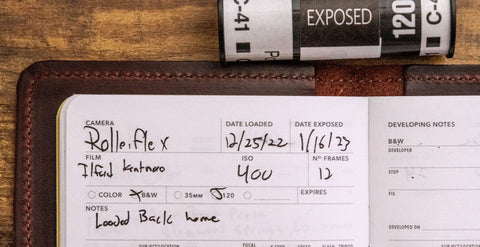
Shooting 35mm & 120 film is intentional by nature. You’ve only got so many frames, and every shot counts.
But once the roll is finished and sent off, there’s a gap—what exactly did you do to get those results?
That’s where a film log comes in.
If you’d rather skip straight to a logbook that’s already structured for you, the WRKBKS Film Photography Log is built exactly for this.
If you’re not sure what to write down when shooting 35mm film, this guide keeps it simple and practical.
Start With the Basics
Before you even take your first shot, log the core details of your setup.
These don’t change frame to frame, but they matter when reviewing your results later.
Write down:
- Camera
- Lens
- Film stock
- ISO (especially if you’re pushing or pulling film)
This gives you context for everything that follows.
When you look back at a roll, you’ll immediately know what you were working with.
Track Your Exposure Settings
This is the most important part.
You don’t need to log every single frame perfectly—but you should track key shots and any changes in conditions.
For each shot (or important shots), write:
- Aperture
- Shutter speed
These two settings tell the full story of how you exposed the image.
Without them, it’s almost impossible to learn from your results.
Pay Attention to Light
Light changes everything in film photography.
Even if your settings stay the same, different lighting conditions will produce very different results.
Make quick notes like:
- Bright sun
- Overcast
- Golden hour
- Indoor / artificial light
- Backlit subject
You don’t need anything technical—just enough to remember the situation.
Note the Scene or Subject
When reviewing your photos later, context matters.
A quick note about what you were shooting helps connect your settings to the final image.
Examples:
- Portrait
- Street scene
- Landscape
- High contrast scene
- Low light
Keep it short. Just enough to trigger your memory.
Capture Anything Unusual
This is where your log becomes really valuable.
Write down anything that feels different, experimental, or uncertain.
For example:
- Metered for shadows
- Guessing exposure
- Shooting into the sun
- Trying a new film stock
- Lens flare or obstruction
These notes explain why a photo turned out the way it did.
You Don’t Have to Track Everything
One of the biggest mistakes is trying to log every single frame perfectly.
That’s not realistic—and it usually leads to quitting altogether.
Instead:
- Focus on key shots
- Log when something changes
- Stay consistent, not perfect
A partial log is still incredibly useful.
What This Looks Like in Practice
A typical entry might look like this:
- f/8 — 1/250
- Kodak Portra 400
- Overcast
- Street scene
- Metered for subject
That’s it. Quick, simple, and enough to learn from later.
Why This Actually Makes You Better
When your scans come back, you’re no longer guessing.
You can connect:
- Settings → Results
- Conditions → Outcomes
- Decisions → Mistakes (and wins)
Over time, you start to see patterns:
- How you tend to expose
- What lighting you struggle with
- Which film stocks you prefer
That feedback loop is what improves your photography.
Keep Your System Simple
The best logging system is the one you actually use.
Keep your notebook with your camera.
Write things down as you shoot.
Don’t overthink it.
Consistency beats detail every time.
A Simple Way to Keep Track

If you want a structured way to log your shots without thinking about layout, a dedicated notebook makes the process easier.
The WRKBKS Film Photography Log Book is designed for 35mm and 120 film shooters, with space to track settings, lighting, and notes for every roll.
It’s built to fit in your pocket—so it’s always there when you need it.