Most notebooks are fine. Fine is the problem.
Fine means it holds ink and fits on a desk. It doesn't mean it survives a back pocket, survives a golf bag, survives three months of daily use without the cover warping or the pages bleeding through. Fine is a low bar, and most of the notebook market is content to clear it and move on.
If you're building an everyday carry setup worth carrying, fine isn't good enough. Here's what actually matters.
Size: Small Enough to Disappear, Big Enough to Be Useful
The notebook that stays home is useless. The whole point of EDC is that it's with you — in a pocket, a bag, a jacket — without you having to think about it. That means size is not a preference, it's a requirement.
Field notes size (3.5" x 5.5") is the standard for good reason. It fits a back pocket flat, slots into most bags without taking over, and gives you enough writing surface to actually capture something meaningful. Go bigger and you'll start leaving it behind. Go smaller and you'll run out of room before you run out of things to write.
Know the difference between a pocket notebook and a desk notebook. They are not the same tool.
Structure: Blank Pages Are a Trap
A blank notebook puts the burden on you. Every time you open it, you have to decide how to organize what you're about to write. For journaling, that's fine. For tracking, logging, or recording — it's a friction point that compounds over time.
The best EDC notebooks are built around a specific job. A golf log should have yardage, fairways, putts, and scoring built into the layout — not a blank grid you have to reinvent every round. A film photography log should have fields for camera, film stock, ISO, and frame notes already waiting for you. Structure isn't a limitation. It's what turns a notebook into a tool.
If you find yourself designing the same page layout over and over in a blank notebook, the notebook is making you do work it should be doing for you.
Durability: It Has to Survive the Job
An EDC notebook lives a harder life than a notebook that sits on a desk. It gets stuffed into pockets, tossed into bags, pulled out in the rain, written in standing up. The cover needs to hold its shape. The binding needs to stay tight. The pages need to take ink without bleeding through to the other side.
This is where cheap notebooks fail fast. A cover that creases after two weeks isn't a notebook — it's a liability. If you're going to trust a notebook with information that matters, it needs to be built to last the full run.
Specificity: The Right Notebook for the Right Task
One notebook trying to do everything usually does nothing well. The golfer, the film shooter, the daily planner, the person tracking tasks across a workday — each of these use cases has a different shape, and the notebook should match it.
At WRKBKS, every notebook in the pocket lineup starts with exactly that question: what does this person actually need to capture, and what's the best possible structure to make that effortless? The Golf Log, the Film Photography Log, the Daily Task Planner, and the Leather Cover that ties the carry together — each one built for a specific job, nothing more and nothing less.
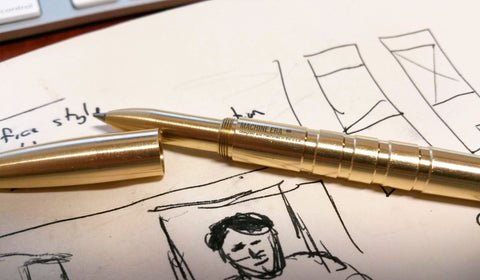
And if you're going to carry a notebook, carry a pen worth carrying. The Machine Era Original Brass pen is a natural pairing — machined in the USA, built to the same standard of intentional, no-compromise design that belongs in any serious EDC setup.
The Bottom Line
A great EDC notebook is small enough to always have on you, structured enough to do its job without friction, durable enough to survive the life you're living, and specific enough to actually be useful. If it checks all four, it earns its place. If it doesn't, leave it on the shelf.
There are a lot of notebooks in the world. Not all of them deserve a spot in your pocket. 🐦